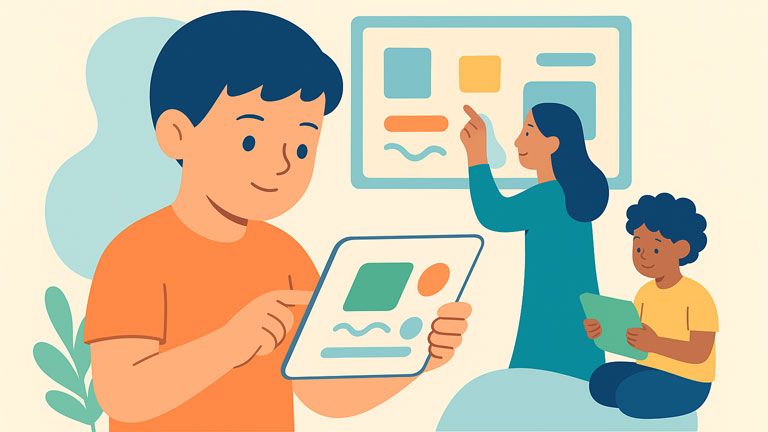
Can technology really shape how young children learn, play, and grow?
In a world where even toddlers can intuitively swipe a screen, technology has quietly entered classrooms and playrooms alike – not as a distraction, but as a powerful tool for learning. The question is no longer whether technology belongs in early education, but how it can best serve children’s development.
Today, early learning centers around the world are using technology not to replace traditional teaching, but to enrich it – blending digital innovation with hands-on discovery. The result is a generation of young learners growing up curious, capable, and connected to the world around them.
A New Era of Learning for Young Minds
The modern early learning environment looks remarkably different from that of just a decade ago. Interactive whiteboards have replaced chalkboards, tablets have become tools for exploration, and even storytelling has evolved through digital books that respond to a child’s voice or touch. Technology is no longer a novelty – it is a bridge that connects imagination with understanding.
Through thoughtfully designed software and applications, children can explore topics like science, nature, and art in dynamic new ways. They can paint with virtual brushes, build digital models of planets, or learn the basics of coding through games that make logic fun. Teachers, in turn, use these tools to track progress, customize lessons, and nurture each child’s curiosity at their own pace.
The Role of Technology in Cognitive and Emotional Development
Contrary to early concerns, technology used responsibly can enhance cognitive growth rather than hinder it. Digital learning platforms offer interactive puzzles that sharpen memory, apps that teach sequencing and logic, and creative tools that encourage expression through music, movement, and color.
More importantly, these innovations also promote emotional development. Virtual storytelling apps, for instance, help children recognize emotions and empathy by interacting with characters that respond to tone and choices. Collaborative games encourage teamwork and communication – teaching children not just what to learn, but how to learn together. Teachers remain central in this process. Their guidance ensures that digital tools reinforce, rather than replace, social and emotional learning. The blend of human connection and interactive technology allows children to explore confidently while still feeling supported and understood.
Building 21st-Century Skills from the Start
The early years are foundational — not just for literacy and numeracy, but for critical thinking, creativity, and adaptability. In a rapidly changing digital landscape, early exposure to guided technology helps children acquire essential 21st-century skills long before formal schooling begins.
Interactive STEM (Science, Technology, Engineering, and Mathematics) tools encourage experimentation and problem-solving. Children learn to test ideas, make mistakes, and try again – an essential skill for lifelong learning. Similarly, early lessons in digital literacy help them navigate technology responsibly, building an understanding of privacy, communication, and collaboration. These competencies aren’t just academic — they prepare children for a world where technology is intertwined with every aspect of daily life.
Technology Integration in Early Learning Centre Environments
At the heart of this revolution lies technology integration in early learning centre environments — a holistic approach that merges innovation with pedagogy. Centers like Insight Early Learning are leading the way by adopting digital tools that support play-based education, real-time parent communication, and individualized learning pathways.
Imagine a classroom where each child explores a customized digital learning station that adjusts to their skill level instantly. Smart boards bring group lessons to life with sound, animation, and touch-based interaction, while virtual reality experiences allow children to “travel” to the rainforest, the ocean, or even outer space — all from the safety of the classroom.
Balancing Digital and Traditional Learning Approaches
As transformative as technology may be, balance remains the cornerstone of effective early education. The most successful classrooms are those that combine digital experiences with real-world exploration and hands-on play. Children still need to run, build, paint, and imagine — tactile experiences that develop motor skills, sensory awareness, and creativity. Technology serves as a complement to these moments, not a substitute. A child might use a tablet to identify different tree leaves, then head outdoors to find them in nature. Or they might use an interactive app to learn about colors, then express their creativity with brushes and paint.
Educators play a crucial role in maintaining this harmony. Their task is to integrate digital tools purposefully, ensuring every activity aligns with developmental goals. Screen time is monitored, engagement is meaningful, and learning remains rooted in play, discovery, and social connection.
Empowering Teachers and Parents Through Data and Communication
One of the most overlooked benefits of technology in early learning is how it strengthens collaboration between teachers and parents. Cloud-based platforms allow educators to record observations, share progress reports, and provide instant updates on a child’s achievements or needs. Parents, in turn, stay connected to their child’s journey, gaining insight into daily activities and developmental milestones.
For teachers, access to data analytics and behavior tracking tools means more informed decisions. They can identify patterns, personalize learning plans, and intervene early when additional support is needed. The digital connection creates a transparent, nurturing ecosystem where every adult in a child’s life works toward the same goal – helping them grow, learn, and flourish.