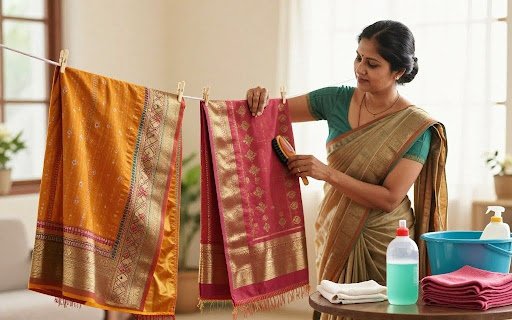
Ever thought your favorite clothes need expensive cleaning? Many think delicate fabrics need harsh chemicals. But you can clean them gently at home with water.
In this saree cleaning guide, I’ll show you how to keep your clothes looking great without spending a lot. Unlike pros, I use gentle care to make your clothes last longer.
With these easy steps, you can take care of your clothes at home. This way, your silk or chiffon stays perfect. Let’s learn how to keep your clothes looking new for a long time.
Key Takeaways
- Understand the fundamental differences between professional chemical treatments and gentle home care.
- Learn why water-based methods are often safer for specific, delicate textiles.
- Discover how to preserve the vibrancy and texture of your traditional garments.
- Save money by mastering essential maintenance techniques in your own space.
- Gain confidence in handling expensive fabrics without risking damage.
Understanding the Science of Dry Cleaning
Before you clean your clothes, it’s key to know the science. Many think saree dry cleaning is easy, but it’s a mix of chemistry and physics. This keeps the fabric safe.
Defining Professional Dry Cleaning vs. At-Home Methods
Professionals use special chemicals to clean clothes without water. This works well for oil-based stains that water can’t handle.
At home, we use controlled, gentle immersion. We don’t use harsh chemicals, but we still need to be careful. Wrong methods can damage the fabric or change its color.
Why Gentle Care Matters for Your Saree Collection
Gentle care is crucial for your collection, like heirlooms or special weaves. The right care keeps the fabric strong.
Regular, careful cleaning also keeps colors bright for years. By following saree dry cleaning tips at home, your favorite clothes stay bright. Learning these methods helps your clothes last longer.
Essential Supplies for Your Saree Cleaning Kit
Keeping your clothes looking great starts with good cleaning supplies. When you learn how to clean saree fabrics at home, take care of the fibers. A good kit helps avoid damage.
Selecting the Right Detergents and Solvents
Choose mild, pH-neutral detergents for delicate clothes. Harsh cleaners can harm silk or change synthetic fibers. Use special fabric washes for luxury clothes to clean gently but well.
For tough spots, have a mild solvent ready. Always test it first to avoid color damage. The right chemicals keep your clothes bright.
Tools for Handling Delicate Fabrics
You also need tools for cleaning. A soft-bristled brush is great for dust and small dirt. Use clean, white cotton towels to dry without color transfer.
A soft mesh bag is key for washing without harming the fabric. Here’s what you should have in your kit.
| Supply Item | Primary Purpose | Best For |
| pH-Neutral Detergent | Gentle cleaning | Silk and Chiffon |
| Soft-Bristled Brush | Spot removal | Embroidered borders |
| White Cotton Towels | Moisture absorption | All fabric types |
| Mesh Laundry Bag | Damage prevention | Delicate weaves |
Preparing Your Saree for the Cleaning Process
Learning how to clean a saree starts before you even get water on it. A quick check can prevent damage and keep your saree’s details safe. I make sure to protect every fiber during cleaning.
Reading Care Labels and Identifying Fabric Types
I always check the care label inside the saree first. It tells me about water temperature and what chemicals to avoid. If there’s no label, I look at the fabric’s feel and weight to guess what it’s made of.
Testing Fabric Color Fastness
Before soaking, I test the saree’s color on a hidden spot. I use a mild detergent on a small area and press it against white cloth. If color bleeds, I won’t soak the whole saree.
Spot Cleaning Common Stains
For small stains, I clean them one by one. This way, I avoid stressing the whole saree. It’s a key part of learning how to clean saree right.
Removing Oil and Food Stains
For oil stains, I use talcum powder or cornstarch to soak up the grease. After a few minutes, I brush it off and then clean with mild soap. I dab gently to avoid damaging the fabric.
Treating Makeup, Tea, Coffee, and Sweat
Makeup and drink stains need a special touch. I use cold water and a bit of gentle detergent to remove them. For sweat on cotton, vinegar works well, but I rinse it well after.
| Stain Type | Recommended Treatment | Best Practice |
| Oil/Grease | Talcum Powder | Blot, do not rub |
| Coffee/Tea | Cold Water Rinse | Treat immediately |
| Makeup | Mild Soap Solution | Use a soft cloth |
| Sweat | Diluted Vinegar | Rinse thoroughly |
Step-by-Step Guide on How to Dry Clean a Saree
Learning how to dry-clean a saree at home is a great skill. It keeps your clothes looking good for a long time. You don’t need to spend a lot on professional cleaning.
Preparing the Cleaning Solution
First, fill a big, clean basin with lukewarm water. Pick a mild detergent for delicate fabrics. This helps avoid damage.
Stir the water until the soap is all mixed in. A light lather is what you want. This stops soap spots from harming your fabric.
“Quality is never an accident; it is always the result of high intention, sincere effort, intelligent direction and skillful execution.”
— William A. Foster
The Gentle Immersion and Cleaning Technique
Now, slowly put your garment in the basin. Use a gentle immersion technique. Just swirl the fabric softly in the water.
Don’t scrub, rub, or wring the fabric. These actions can harm it. Let the water soak into the fabric for a bit to clean it.
Rinsing and Removing Excess Moisture
Drain the basin and fill it with cool, clear water. Rinse the garment until all soap is gone. This keeps the fabric bright.
To end the saree dry cleaning process, lay a clean towel flat. Put the wet saree on it. Roll them together to soak up water without harming the threads.
This towel-rolling method is key to keep the saree’s shape. Once the towel absorbs the water, unroll it. Then, get ready for the drying stage.
Fabric-Specific Care Instructions
When you decide to dry-clean saree styles at home, you must tailor your technique to the specific material. Every fabric in your wardrobe demands a unique approach to cleaning. This keeps its original luster and structural integrity.
Handling Silk, Banarasi, and Kanjivaram Sarees
Heavy silks like Banarasi and Kanjivaram are prized for their rich texture and intricate zari work. These fabrics are highly sensitive to water. Water can cause the metallic threads to tarnish or the fabric to lose its sheen.
I recommend using a specialized solvent rather than water to dry clean saree pieces made of pure silk. Always keep these garments away from direct sunlight. This prevents the natural fibers from becoming brittle over time.
Cleaning Cotton and Linen Sarees
Cotton and linen are durable, yet they require careful handling to maintain their signature crispness. To prevent shrinkage, I suggest using cold water and a mild detergent. This is for delicate natural fibers.
Avoid wringing these fabrics, as this creates deep wrinkles that are difficult to remove. Instead, gently press the moisture out using a clean, dry towel. This ensures your dry-cleaned saree process remains effective and safe.
Managing Chiffon, Georgette, and Organza
These sheer fabrics are incredibly delicate and prone to snagging during the cleaning process. You must handle them with extreme care. Use only light, rhythmic motions to avoid mechanical stress on the weave.
“The secret to preserving delicate textiles lies in minimizing agitation and using the gentlest cleaning agents available.”
Special Care for Embroidered and Embellished Sarees
Heavily embroidered sarees require a focus on protecting the intricate threadwork and beadwork from damage. I always advise turning these garments inside out before starting the cleaning process. This shields the embellishments.
By limiting the time the fabric spends submerged, you protect the integrity of the stitching. This careful approach ensures that your dry clean saree routine keeps your most ornate pieces looking brand new for years.
| Fabric Type | Primary Concern | Cleaning Method |
| Silk/Banarasi | Water Damage | Solvent-based |
| Cotton/Linen | Shrinkage | Cold water wash |
| Chiffon/Organza | Snagging | Light hand-dip |
| Embellished | Thread damage | Inside-out wash |
Drying and Finishing Techniques
After cleaning, it’s key to handle your fabric with care. This keeps its shape and feel. When you dry clean saree items at home, the way you finish them matters a lot. Doing it right keeps your clothes looking new.
Safe Air-Drying Methods to Prevent Stretching
Always air-dry your sarees in a shaded, breezy spot. Direct sunlight can harm the fabric and make colors fade. Keeping your saree out of the sun helps it stay strong.
To stop stretching, don’t hang a wet saree on a thin hanger. Lay it flat on a clean towel over a drying rack. This way, it dries evenly without stretching.
Ironing and Steaming for a Professional Look
When your saree is dry, you might see wrinkles. I use a handheld steamer for delicate pieces. It gets rid of wrinkles without touching the fabric.
If you need to iron, use low heat and a cloth to protect the fabric. Storing your dry clean saree right is also important. Keep them in breathable cotton covers to keep them fresh.
| Fabric Type | Drying Method | Finishing Tool |
| Silk | Flat Air-Dry | Handheld Steamer |
| Chiffon | Shaded Air-Dry | Low-Heat Iron |
| Cotton | Flat or Line Dry | Steam Iron |
| Embellished | Flat Air-Dry | Professional Steamer |
Common Mistakes to Avoid During Saree Maintenance
I’ve seen many beautiful sarees get ruined because of simple mistakes. When you buy high-quality sarees, you must be careful with the saree dry cleaning process. Many people accidentally damage their clothes by rushing or using the wrong tools.
Avoiding Harsh Chemicals and Excessive Agitation
Using harsh chemical bleaches is a big mistake. These are for tough fabrics and can hurt delicate ones like silk or chiffon. Always avoid them to keep your sarees looking great.
Also, don’t put your saree in a regular washing machine. The strong cycles can break threads and mess up embroidery. It’s better to wash them by hand to keep them safe.
Preventing Color Bleeding and Fabric Damage
Color bleeding happens when you soak clothes wrong or use the wrong water temperature. Always test your fabric first to avoid ruining your saree dry cleaning process. Being patient is key when caring for these special items.
“The longevity of a fine garment is directly proportional to the gentleness of the care it receives throughout its lifetime.”
– Textile Preservation Expert
I’ve made a quick guide to help you keep your sarees safe.
| Action | Safe Practice | Dangerous Practice |
| Cleaning Agent | Mild, pH-neutral soap | Chlorine-based bleach |
| Agitation | Gentle hand-swishing | Machine spin cycle |
| Drying | Flat air-drying | Direct sunlight exposure |
| Stain Removal | Professional spot treatment | Scrubbing with a brush |
By following these tips, your saree dry cleaning process will be safe and effective. Taking care of your clothes will make them last longer and look better.
When to Seek Professional Dry Cleaning Services
Knowing when to ask for help is key for saree lovers. Some jobs need special tools and skills found in saree dry cleaning shops. This way, your favorite sarees stay beautiful for a long time.
Identifying High-Risk Fabrics and Intricate Work
Some fabrics are too delicate for DIY cleaning, no matter how careful you are. Antique silks, for example, can get weak and fall apart if wet.
Also, sarees with lots of metal or detailed embroidery need a pro. These can get damaged if not cleaned properly. Always choose saree dry cleaning for items with:
- Antique or vintage silk that frays easily.
- Heavy metallic threads that can rust.
- Beadwork or sequins that might fall off.
- Complex fabrics with many layers.
“True preservation of heritage textiles requires a deep understanding of fiber chemistry and the gentle precision that only professional cleaning environments can provide.”
Signs That Your Saree Requires Expert Intervention
Even though fabrics sometimes need a pro. If a stain from oil, wine, or dye is deep, trying to clean it at home can ruin the fabric.
Also, if your saree looks worn or has loose seams, it’s best to get it cleaned by a pro. They use special cleaners that work better than regular ones for saree dry cleaning. This keeps your collection safe and looking great.
Conclusion
Learning to care for your clothes at home makes you feel confident. My guide helps you keep your sarees looking great. Gentle care keeps them bright and beautiful.
I get asked a lot about taking care of these special clothes. Here are answers to common questions about stains and storage.
How do I remove stubborn oil stains? First, use a little cornstarch to soak up the oil. Then, apply a mild soap gently. Don’t rub the fabric.
What is the best way to store silk sarees? Wrap them in soft cotton cloth. This lets the fabric breathe and keeps it safe from dust and moisture.
Can I use a standard washing machine for my sarees? No, it’s best not to machine wash them. Hand washing is safer to avoid damage.
By following this guide, your sarees will stay beautiful for a long time. Share your care tips or ask about specific fabrics. Your care makes your traditional clothes look forever young.
FAQ
How do I determine if I should professionally dry clean my saree or wash it at home?
First, always check the care label. For special items like Sabyasachi silk, go for professional cleaning. But, for everyday cottons, you can wash them at home with a gentle detergent.
What is the main difference in the saree dry cleaning process when done by a professional?
Professionals use special solvents, not water. This method is better for removing stains without harming the fabric. At home, using a washing machine can be risky.
Can I remove stubborn stains like ink or red wine using this saree cleaning guide?
Yes, but act fast. For ink, try isopropyl alcohol on a cotton swab. For food or wine, use Carbona Stain Devils. Always test a hidden spot first to avoid color loss.
How do I maintain the crisp texture of my cotton and linen sarees at home?
For Fabindia cottons, use light spray starch while ironing. Air-dry until damp, then iron with a T-fal steam iron. This keeps them crisp without needing a professional.
Is it safe to use a home dry cleaning kit for my embroidered Georgette sarees?
Be careful with home kits for fancy sarees. Dryers can damage beads or sequins. Instead, gently immerse and dry flat to protect the embroidery.
How should I store my sarees after the cleaning process is complete?
Store them right to keep them fresh. Don’t use plastic for silks; they need air. Use muslin or cotton bags from The Laundress. Refold them often to avoid damage.
What should I do if my saree starts to develop a musty odor?
For musty smells, avoid strong perfumes. Hang them in a shaded, airy spot for hours. If still smelly, a gentle wash at home can help.